Sebastian Wahl
Emergence Lab · Paris, France
Scholar[RAG] →
Sebastian Wahl

Sebastian Wahl

Independent Researcher · Emergence Lab · Paris, France

I spent six years making tiny silicon membranes tell us — this is the story.

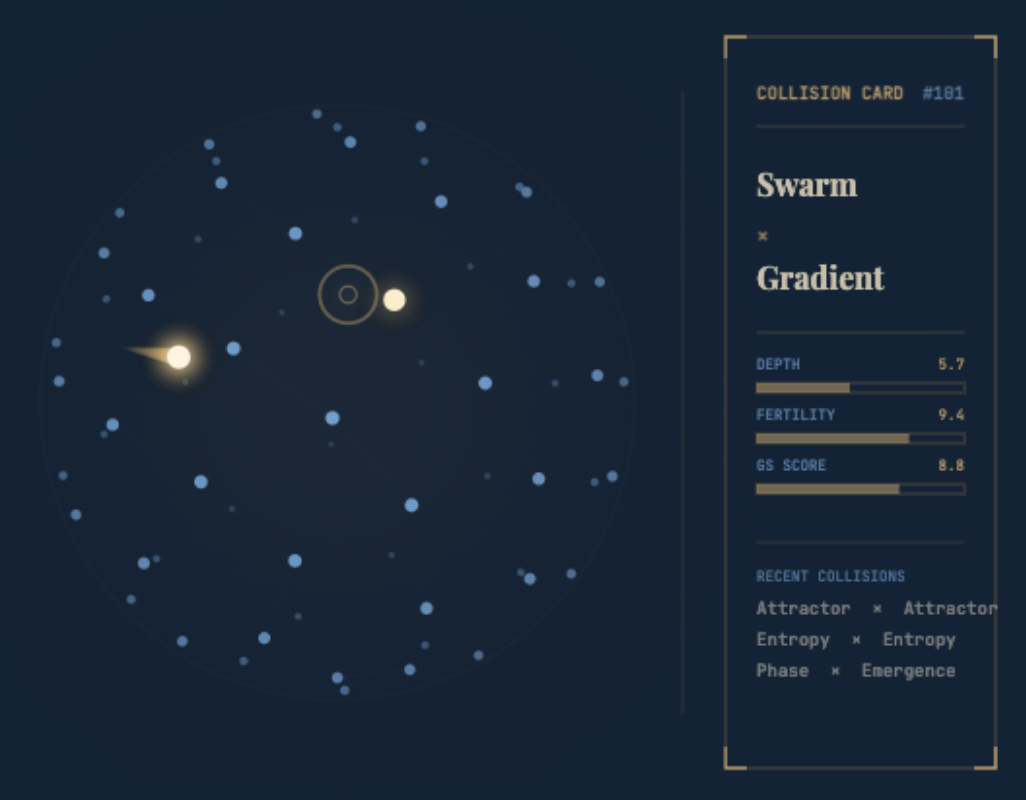
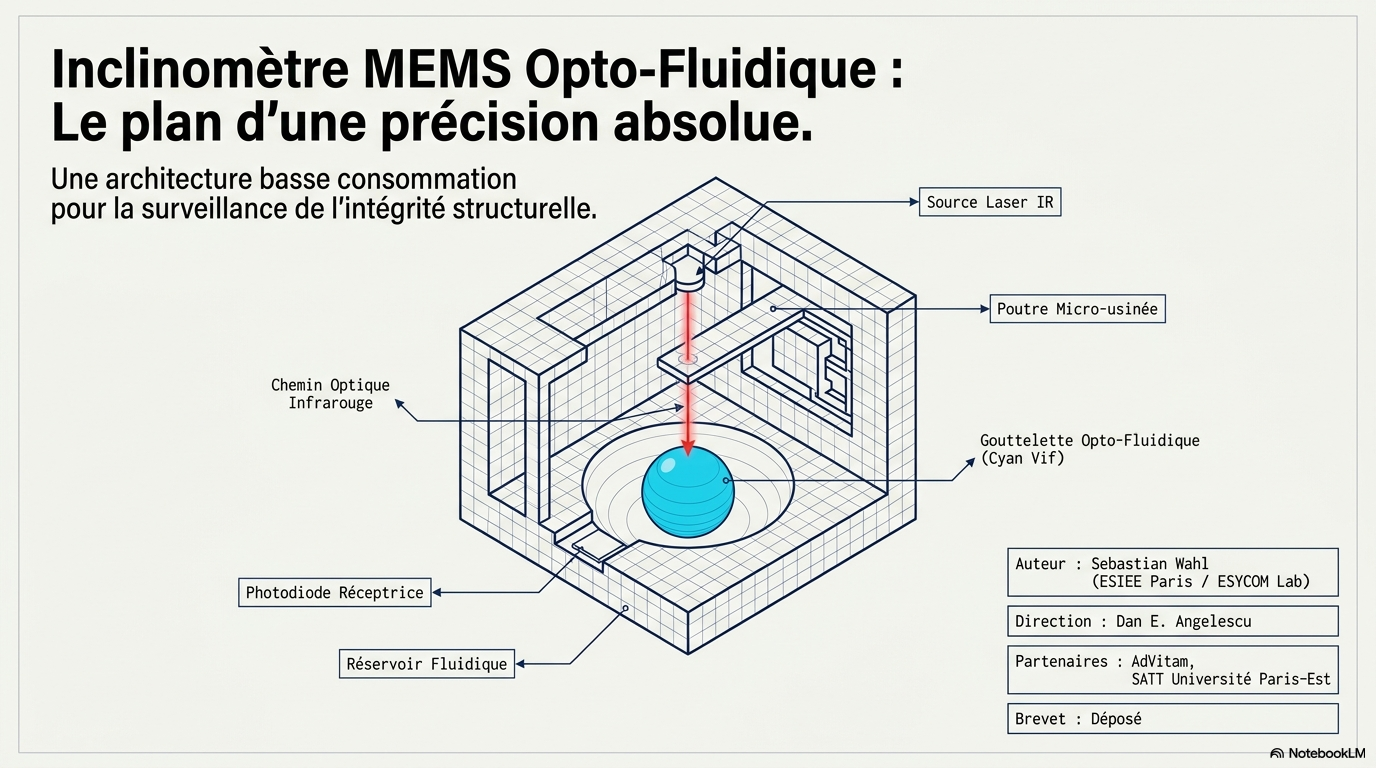
A MEMS engineer turned computational creativity researcher. Doctoral work at ESIEE Paris (ESYCOM Lab, 2010–2014) under Dan E. Angelescu produced a dual-axis optofluidic inclinometer reaching 0.0073° on under 1 mW — patent via SATT, six papers across IEEE MEMS, PRL, RSC Advances, Lab on a Chip. Since 2025, building Concept Collider at Emergence Lab : a white-box framework for fertile creative emergence. Accepted at ICCC 2026 (Coimbra, 29 June – 3 July).

Past

ESIEE Paris
ESYCOM Lab · 2010–2014
Dir. Dan E. Angelescu

Present

Emergence Lab
Paris · 2025 →
Concept Collider · ScholarRAG

Soon

ICCC 2026 · Coimbra
29 June – 3 July
poster session

6 papers · 1 patent · ICCC 2026 · Coimbra · 29 June – 3 July

Affiliations

  • Emergence Lab2025 →Founder · Independent researcher
  • ESIEE Paris · ESYCOM Lab2010 — 2014PhD candidate (Dr. Dan E. Angelescu)
  • SATT Université Paris-Est2014Patent inventor (inclinometer)
  • AdVitam2010 — 2014Industrial partner (civil engineering monitoring)

Trajectory

  • Computational Creativity2025 →Concept Collider · accepted ICCC 2026 (Coimbra) · building ScholarRAG
  • MEMS Optofluidics2010 — 2014Doctoral research on dual-axis MEMS inclinometers at ESIEE Paris (ESYCOM)

Keywords · drawn from the body of work

MEMSinclinometrywhite-box AIoptofluidicsmercury dropletConcept Colliderphase transitioncomputational creativityDRIEfluoropolymermicrofluidicscreative emergenceBlack Siliconnanoemulsionsquadrant photodetectorsuperhydrophobicitycapillary scalingmonodisperse bubbleslow-power sensingstructural health monitoring

I spent six years making tiny silicon membranes
tell us which way is up.
— this is the story.

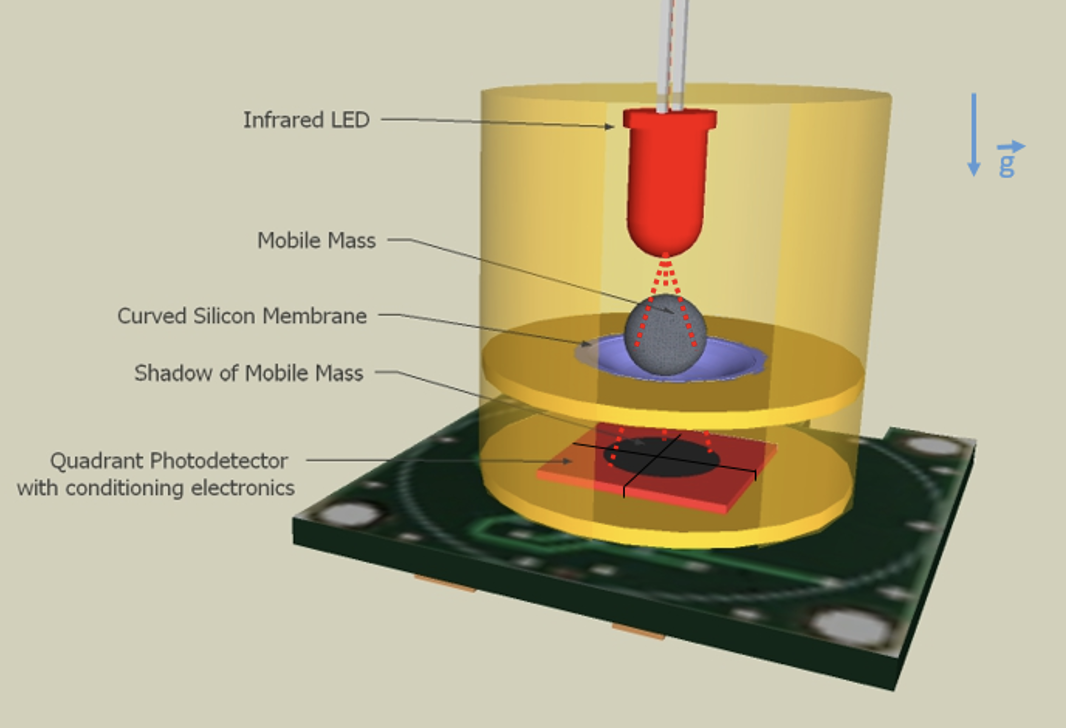
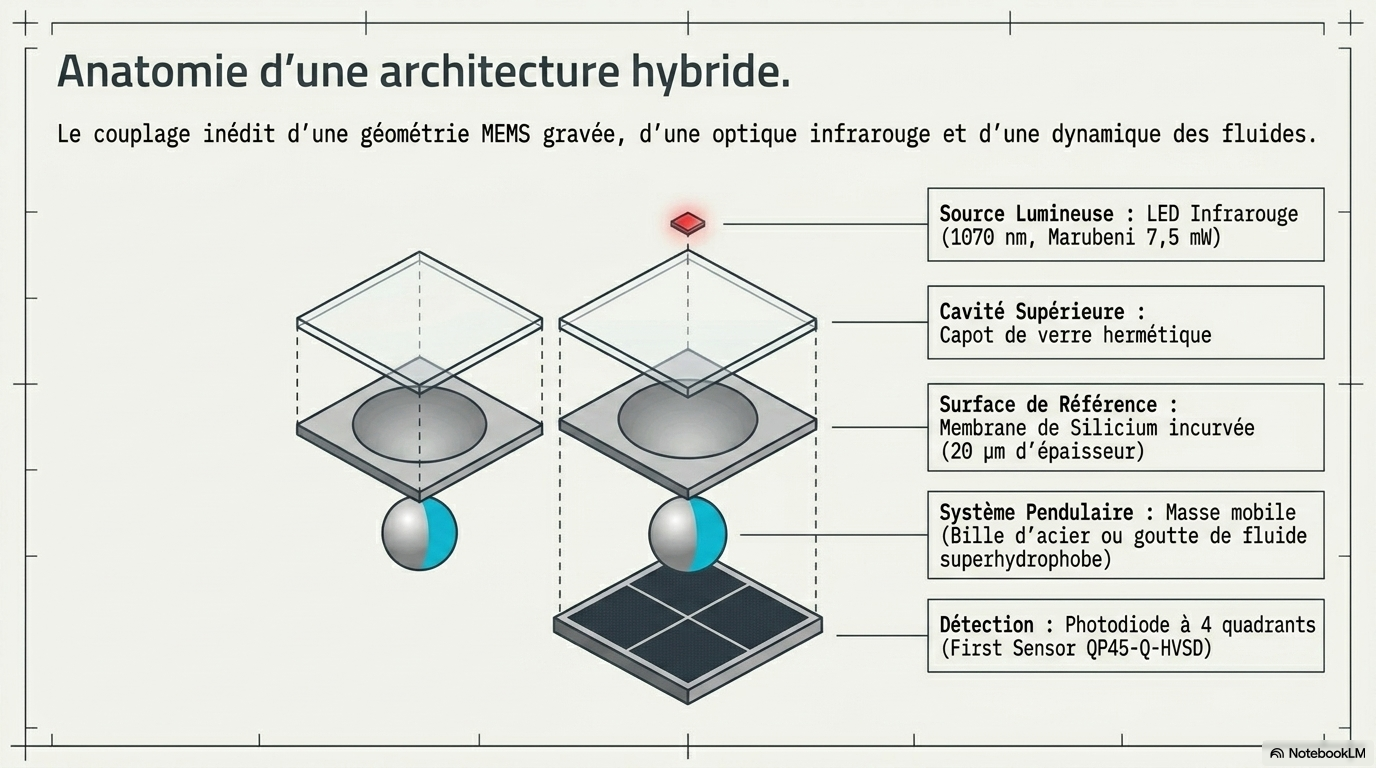
The physics underneath is what kept me going — a steel ball rolling on a membrane, light bending through a liquid, a tilt angle encoded in a photocurrent. My work sits at the intersection of microfluidics, photonics, and precision sensing, where the most interesting questions live in the gap between disciplines.

MEMSOPTOFLUIDICSSUPERHYDROPHOBICITYBLACK SILICON

7 papers, one ongoing conversation.

Each entry carries a synopsis and an aside — what the paper means, what I'd say about it in person.

01

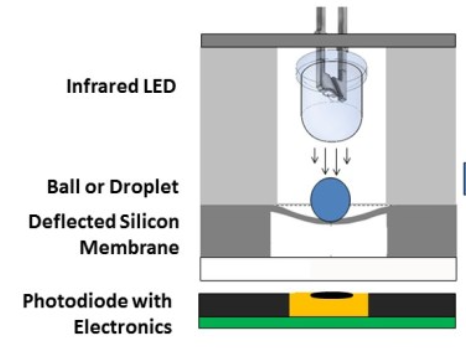
Dual-axis sub-0.05° optofluidic inclinometer
IEEE MEMS
~2013 · first author · PDF

Figure for Dual-axis sub-0.05° optofluidic inclinometer

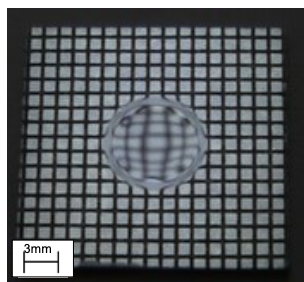
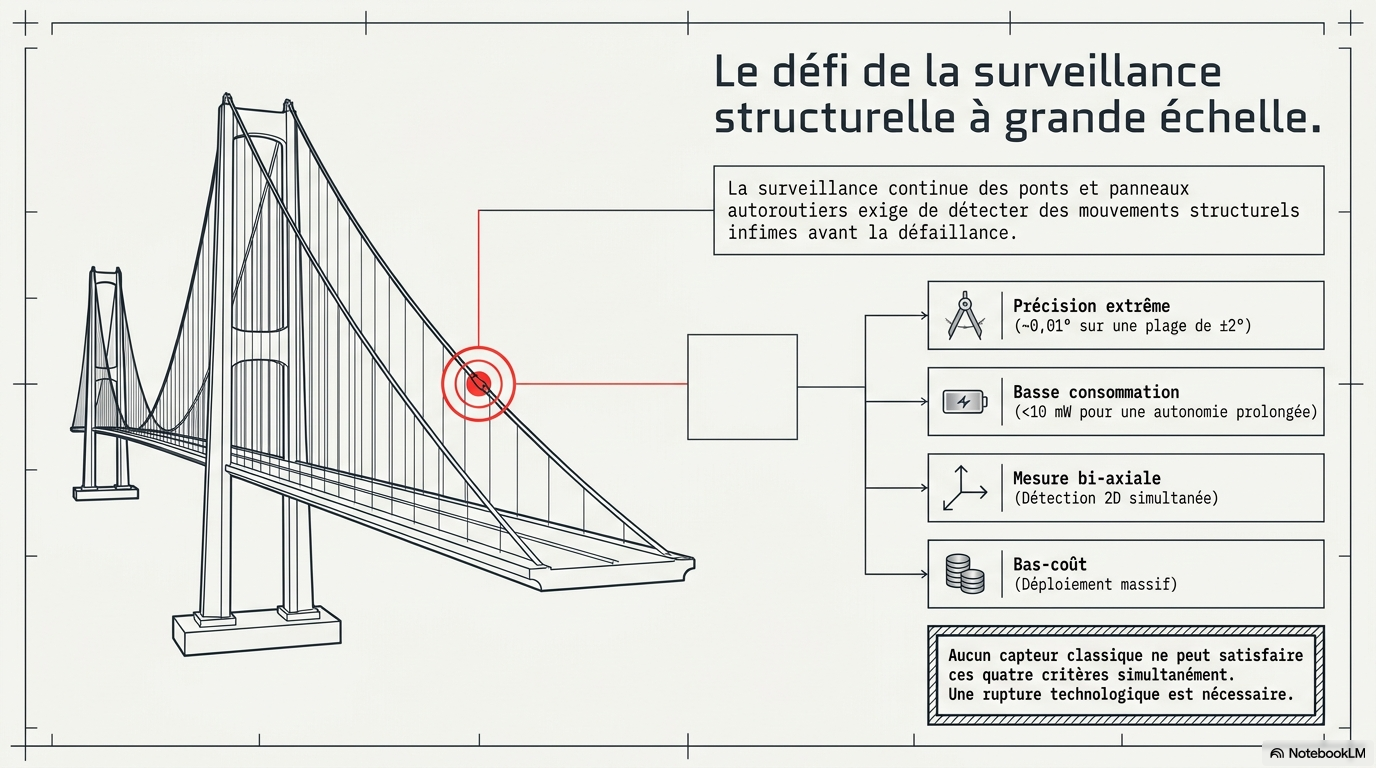
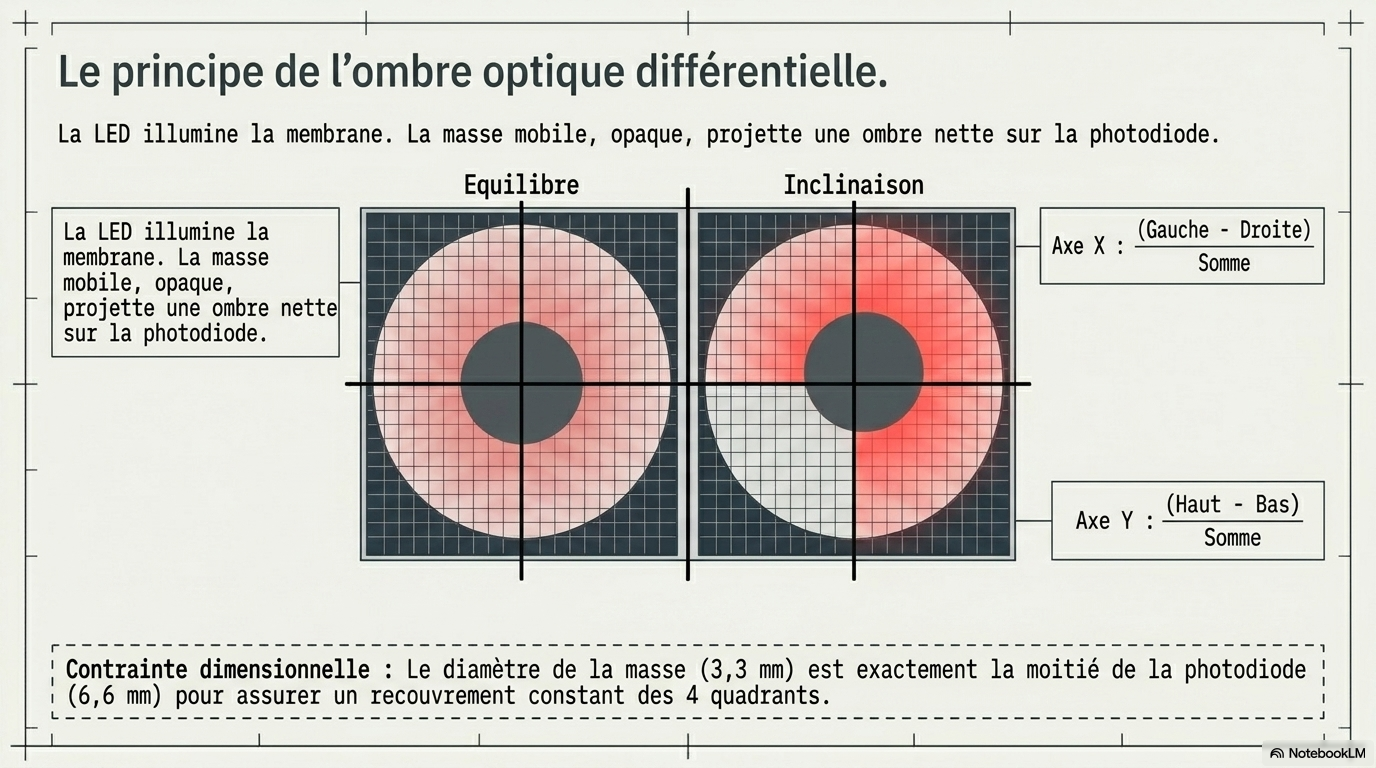
Deflected silicon membrane + steel ball / mercury droplet + quadrant photodetector. Sub-0.05° linear range on ±1°. Under 1 mW total power. Built for civil-engineering structural monitoring (bridges, highway panels).

if you only read one of these, read this one. It's where everything started.
02

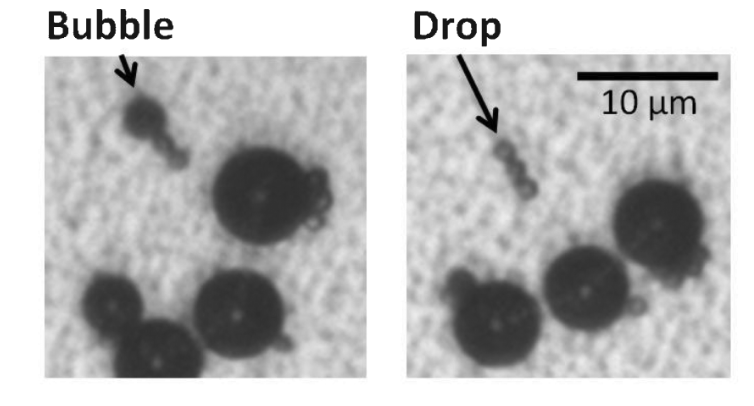
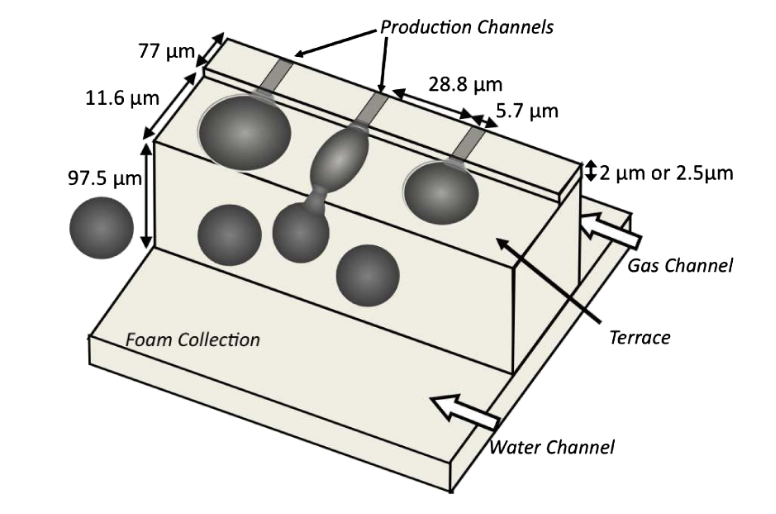
Mechanism of microfluidic bubble production by foam emulsification

Physical Review Letters
2012 · second author · PDF

Figure for Mechanism of microfluidic bubble production by foam emulsification

Semi-empirical model for monodisperse bubble generation in microchannel emulsification. Pinch-off asymmetry, capillary number scaling, prediction validated across four geometries.

my first PRL — still a slight disbelief about it.

03

Submicron nanodrops by gas-to-liquid phase transition

RSC Advances
2013 · third author · PDF

Figure for Submicron nanodrops by gas-to-liquid phase transition

CO₂ + perfluorohexane bubbles shrink under controlled diffusion and condense into submicron droplets. Radius scales as γ^(1/3) over three orders of magnitude. A scalable route to nanoemulsions.

γ^(1/3) over 1000× — the most elegant scaling law I've ever worked with.

04

Optofluidic inclinometer — ESYCOM poster

ESYCOM 2013
2013 · first author · PDF

Figure for Optofluidic inclinometer — ESYCOM poster

Compact poster format of the IEEE paper. σ_y = 0.033°, σ_x = 0.063° (steel ball). σ_y = 0.024°, σ_x = 0.051° (mercury droplet).

my first poster. I clearly have a thing for posters — this entire page is one.

05

High-precision optofluidic inclinometer on nano-patterned superhydrophobic surface

Lab on a Chip
~2016 · first author · DOCX

Figure for High-precision optofluidic inclinometer on nano-patterned superhydrophobic surface

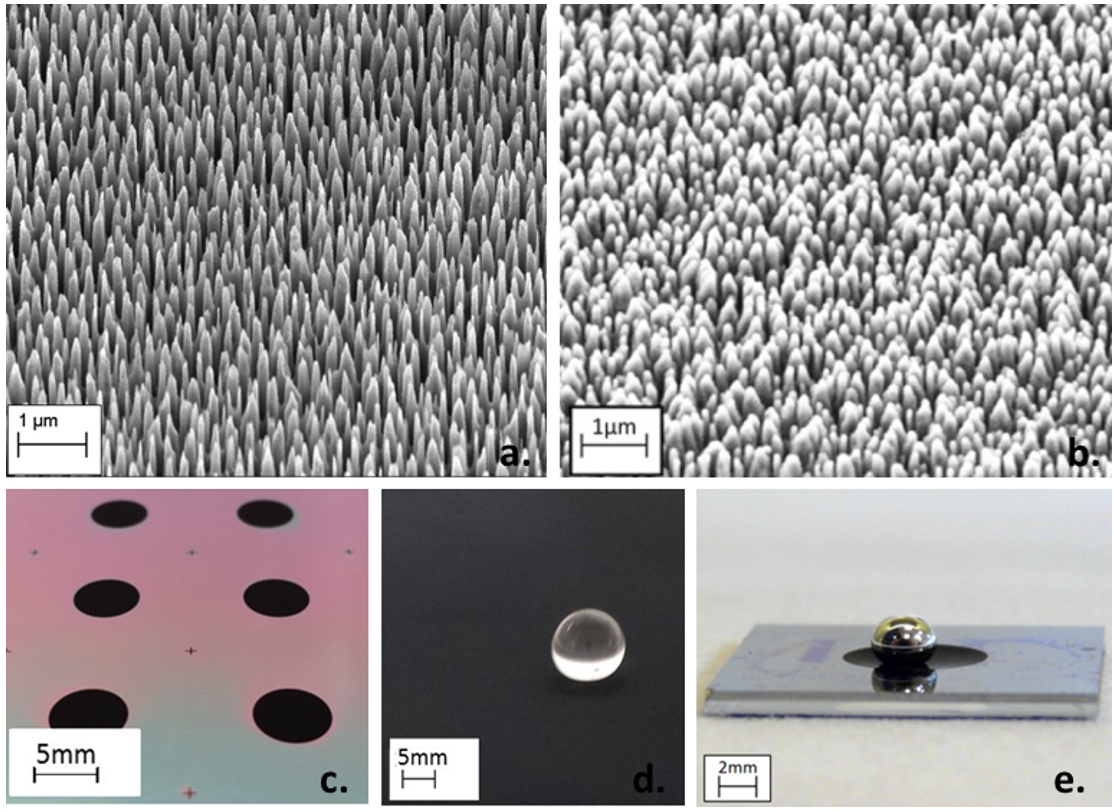
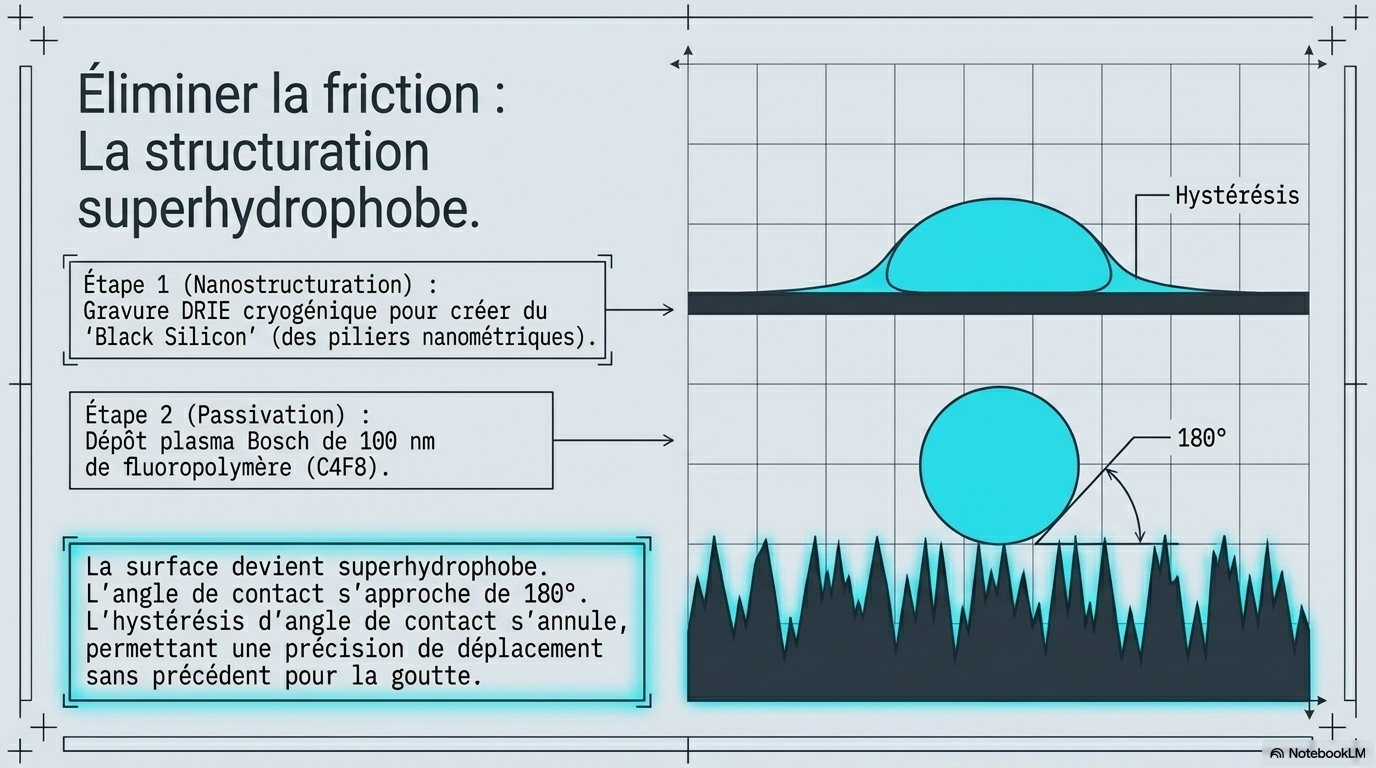
Black-silicon DRIE-cryogenic etching + 100 nm C₄F₈ fluoropolymer coating → contact angle → 180°. Hysteresis nearly suppressed. Best configuration (NS-L-2, mercury, BSi): σ_x = 0.0073°, σ_y = 0.0126°.

the one that taught me what patience really means.

06

Low-power optofluidic microsystems — intermediate thesis manuscript

Université Paris-Est · ESIEE Paris
~2014 · author · PDF

Figure for Low-power optofluidic microsystems — intermediate thesis manuscript

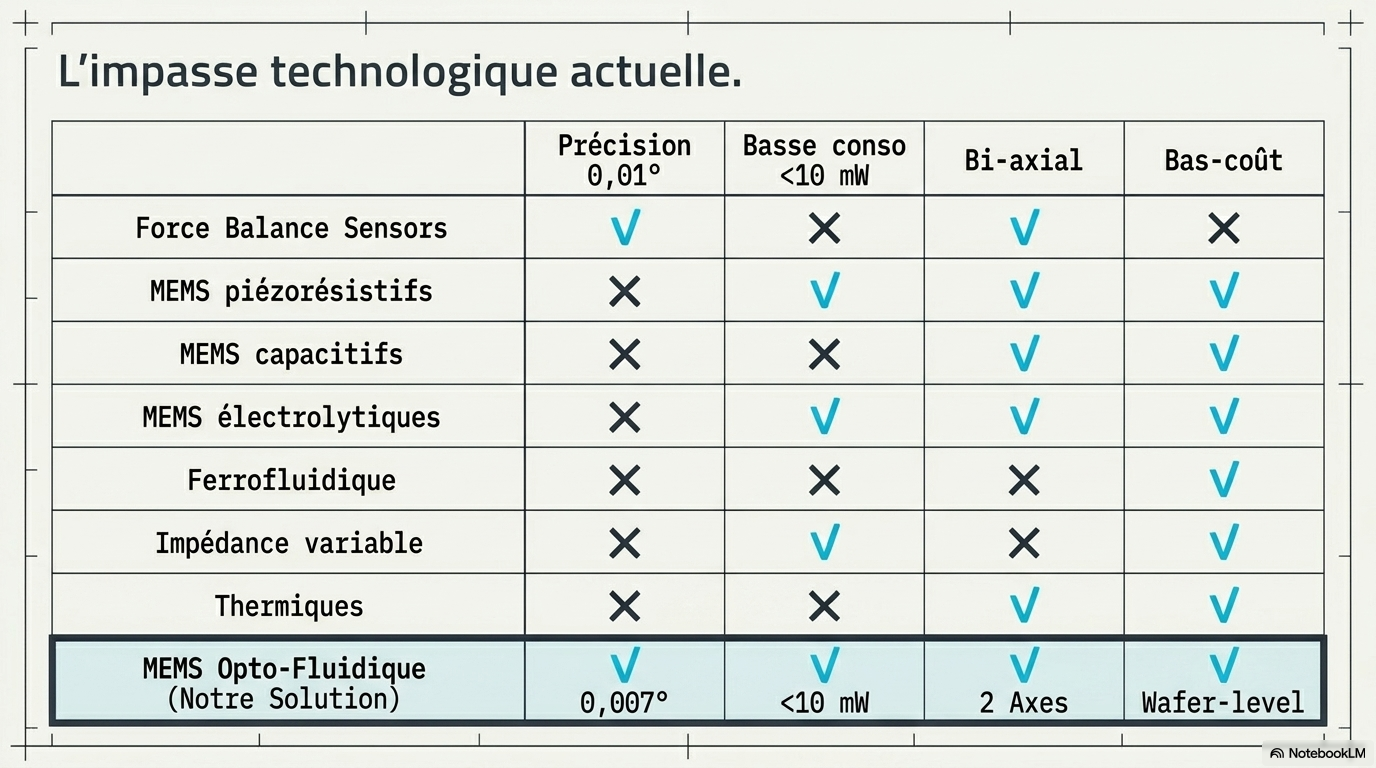
State of the art and design space of MEMS inclinometers. Force-balance, piezoresistive, capacitive, electrolytic, thermal, ferrofluidic. No prior system satisfies precision + low power + bi-axial + low-cost simultaneously. Directed by Dan E. Angelescu.

also the most-read thing I've written — ironically because of its bibliography.

07

The Concept Collider: A White-Box Computational Framework for Targeted Creative Emergence

ICCC'26 — Coimbra, Portugal
2026 · first author · publisher ↗

Figure for The Concept Collider: A White-Box Computational Framework for Targeted Creative Emergence

A computational framework modelling creative emergence as precision-targeted collisions between concepts from decorrelated domains. 44 collisions, 100% emergence rate at mean score 8.24/10. First white-box computational creativity system — every emergent concept fully traceable to its source, fracture operator, and collision step.

Accepted · Poster session · Independent Researcher, Emergence Lab

A paper tells you the result.
It rarely tells you the road.

A few questions I'd want you to ask me, if we were sharing a coffee. The answers are mine — please read them as such.

Don't read me — talk to me.

All six papers above live inside my ScholarRAG. Ask any question — the methodology of the bubble paper, why mercury beat the steel ball, what I'd do differently with what I know now. The answer comes back with the page number, and it's grounded in what's actually written.

It's me, in conversation form. Twenty-four hours a day. Never tired.

Open the chatbot

Distilled. Printable. Shareable.

If you want to take something from this page — the research, distilled into different formats. Each one generated from the same corpus, grounded in the source papers.

PDF · one page

The inclinometer, on a single page

The principle, the two masses, the precision figures. Auto-generated from the corpus, then reviewed line by line. Good for a wall, a teaching aid, or a quick reference.

Download the infographic →

Audio · podcast

A podcast tour of the six papers

Two voices, conversational, designed for a commute or a walk. Generated from the corpus, then checked for factual integrity.

Infographics · 7 visuals

The inclinometer — detailed infographics

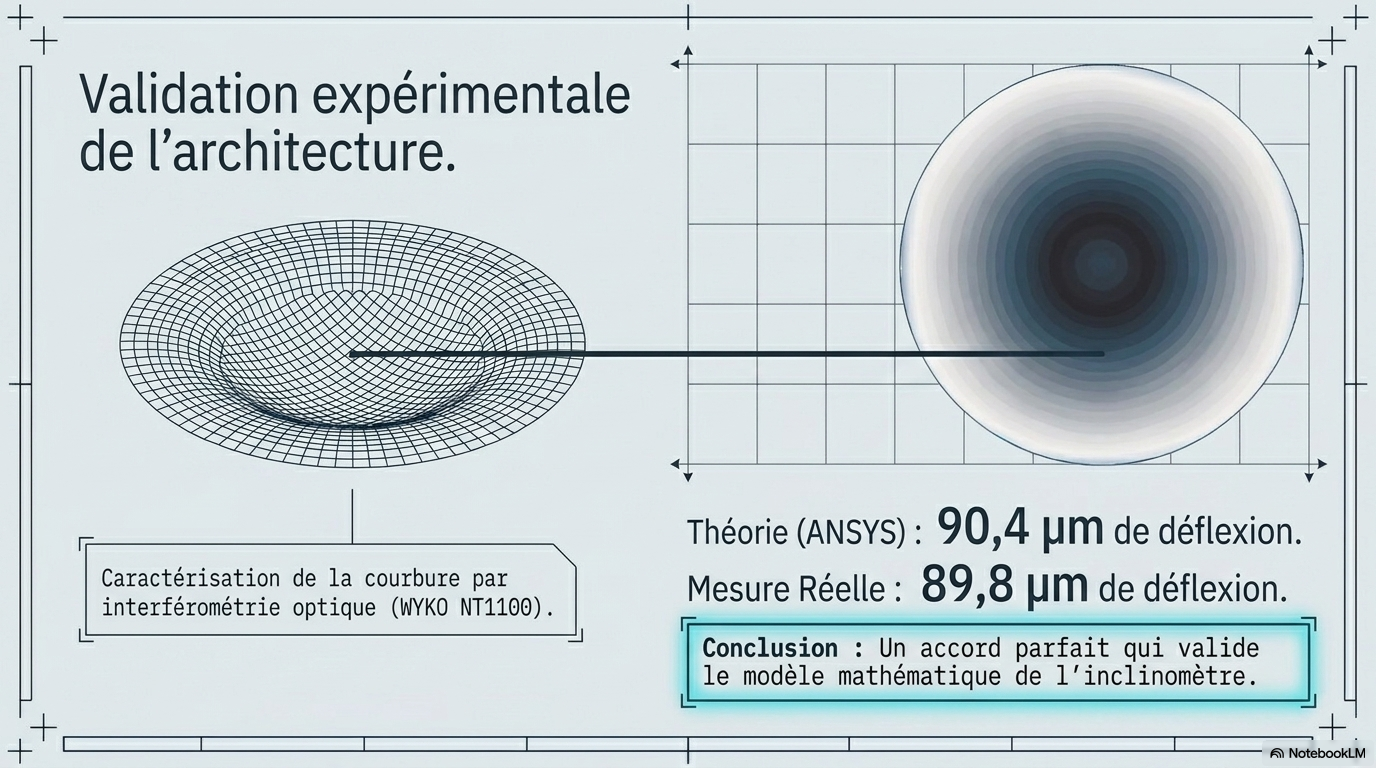
Seven auto-generated infographics covering the core concepts: optical shadow, superhydrophobic structuring, experimental validation, and more. Each one reviewed for accuracy.

Video · explainer

Microfluidic bubbles — a visual tour

A generated video walkthrough of the bubble production paper. Auto-generated from the corpus.

Watch the video →

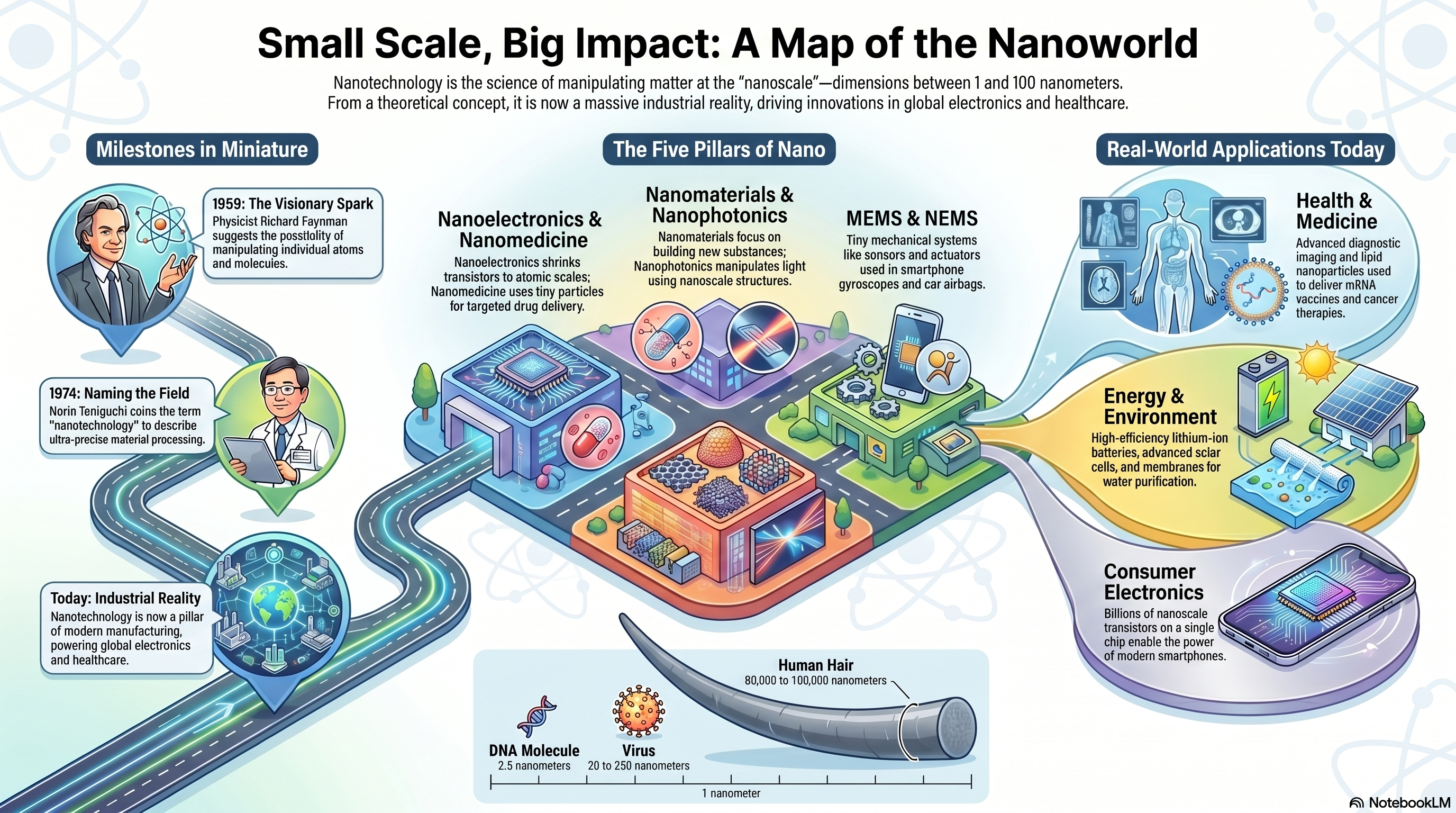
Explore Nanotechnology.

A curated overview of nanotechnology — podcasts, slides and study guide generated by ScholarRAG from public academic sources. Shared with all researchers in this field.

Listen

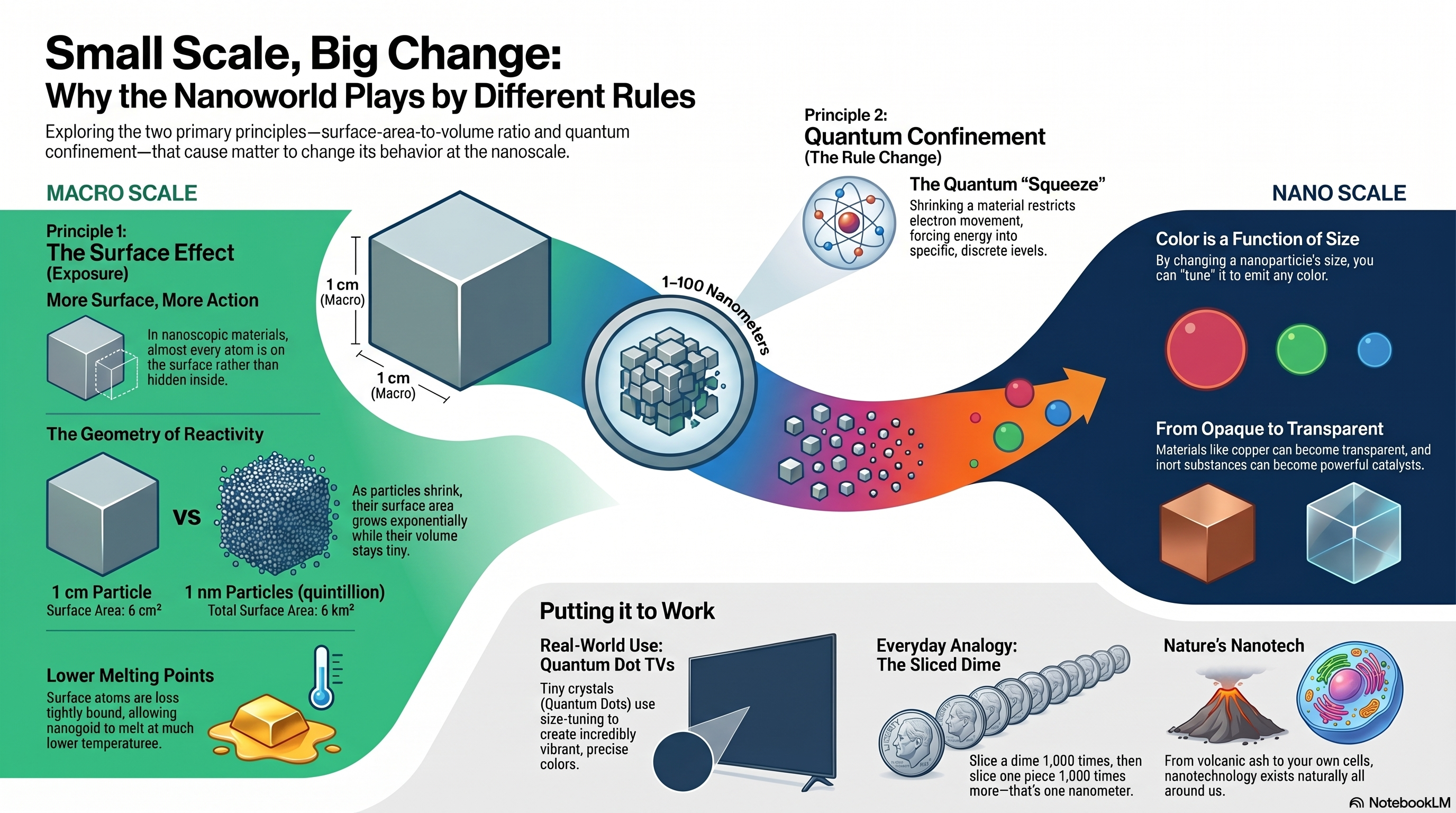
Why Tiny Gold Shatters Physical Laws

The counterintuitive fact that hooked a generation of physicists — and why the nanoworld defies everything we know

Six Square Kilometers Inside a Die

An everyday metaphor that makes the most important concept in nanotechnology immediately tangible

Nanotechnology — A Field Overview

Sub-fields, governing principles at the nanoscale, and key fabrication processes — structured for a master's student

Nanotechnology in the Real World

Applications by sector — healthcare, electronics, energy, materials — with concrete examples and current deployment status

Generated by ScholarRAG from public academic sources. Not endorsed by any individual researcher.

What if your research collided with a distant domain?

The Research Collider shoots a semantically distant domain at this corpus and extracts a traceable emergent direction — white-box, every step auditable: corpus anchor, fracture type, S-factor, emergent hypothesis.

V1 prototype · demonstrated live at ICCC 2026, Coimbra

research-collider.log — wahl@iccc2026
● LIVE
RESEARCH COLLIDER · V1 · F1–F7 FRACTURE ENGINEnanotechnology · MEMS · optofluidics · computational creativity
$ research-collider v1.0 · ICCC 2026, Coimbra
Corpus: S. Wahl · 3 papers · nanotechnology × computational creativity

This page is what a ScholarRAG looks like —
and it is the first of its kind.

I'm Sebastian Wahl, and I'm building ScholarRAG — a platform where any researcher, independent or academic, can have a page like this : own corpus, own AI, own continuity.

Your ScholarRAG follows you across institutions. The lab page disappears when you change posts. This one doesn't.

If this resonates — don't hesitate to reach out.